Foenegriek: Complete Guide to Fenugreek, Uses, Benefits, Safety, and History
Foenegriek is a name used for fenugreek, a clover-like herb known scientifically as Trigonella foenum-graecum. The word appears especially in Dutch and German contexts, while “fenugreek” is the common English name used in the United States. Fenugreek has been used as a food ingredient, spice, and traditional herbal plant for thousands of years. Its small golden-brown seeds have a distinctive aroma and a flavor that many people compare with maple syrup.
Today, people may encounter foenegriek when reading European food labels, recipes, herbal information, ingredient lists, or international health content. In the United States, the same plant is generally identified as fenugreek.
Fenugreek is interesting because it sits between food, traditional medicine, agriculture, and modern dietary supplement research. Its seeds are used in cooking, while concentrated extracts and supplements are sometimes promoted for blood sugar, women’s health, digestion, breastfeeding, and other purposes. However, traditional use and modern scientific evidence are not the same thing.
Current evidence does not support treating fenugreek as a proven cure for medical conditions. Some studies suggest possible effects on blood sugar and other health measures, but research quality and results vary. The National Center for Complementary and Integrative Health notes that there is still not enough high-quality evidence to determine whether fenugreek is useful for several commonly promoted health purposes.
What Is Foenegriek?
Foenegriek is another name for fenugreek, a plant belonging to the legume family. Its scientific name is Trigonella foenum-graecum.
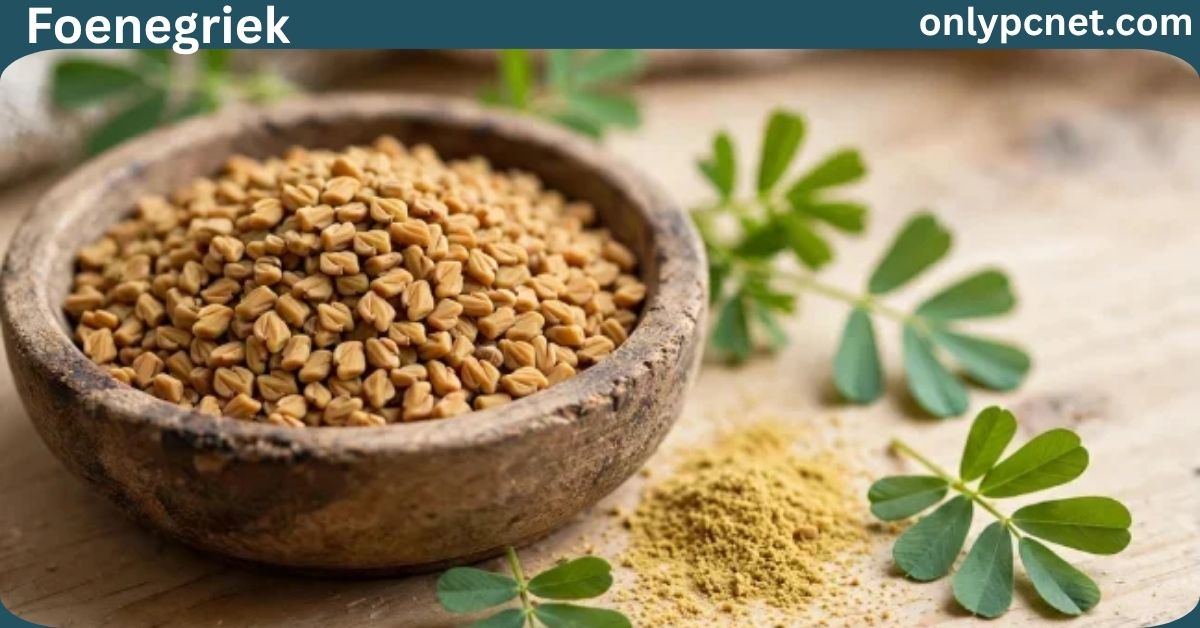
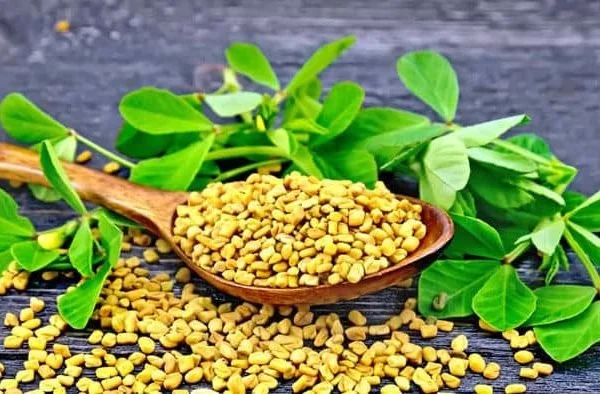
The plant has small leaves that look somewhat similar to clover. It produces long, narrow seed pods containing several hard, yellowish-brown seeds. These seeds are the part most commonly used as a spice or herbal ingredient.
In English-speaking countries, including the United States, the word “fenugreek” is much more common than “foenegriek.” The term foenegriek may appear because of Dutch or German language use, international websites, translated recipes, or imported food products.
The U.S. Food and Drug Administration also lists “foenegriek” as another name for fenugreek in its food ingredient information.
In simple terms:
Foenegriek = Fenugreek = Trigonella foenum-graecum
The plant can be used as a food ingredient, flavoring, spice, or dietary supplement ingredient, depending on the product and intended use.
Foenegriek Meaning in English
The English meaning of foenegriek is fenugreek.
If you see the word foenegriek in a recipe or ingredient list, it generally refers to the same plant that English-language recipes call fenugreek.
The word can therefore create confusion for people who are unfamiliar with European food terminology. Someone searching for “foenegriek” may actually be looking for information about fenugreek seeds, fenugreek powder, fenugreek leaves, fenugreek tea, or fenugreek supplements.
The most useful translation is simply:
Foenegriek means fenugreek in English.
What Is Fenugreek?
Fenugreek is an aromatic herb that has been cultivated and used by humans for a very long time. The seeds are particularly important because they contain compounds responsible for their characteristic smell, taste, and culinary properties.
Fenugreek seeds have a warm, slightly bitter flavor with a distinctive sweet aroma. When used correctly in cooking, they can add depth to sauces, curries, spice blends, vegetables, and other dishes.
Fenugreek leaves are also used in some cuisines. Fresh leaves and dried leaves have different culinary characteristics, so they should not automatically be treated as interchangeable with fenugreek seeds.
The plant has also attracted scientific interest because fenugreek contains fiber and several naturally occurring plant compounds. Researchers have studied whether these components may influence blood glucose, digestion, inflammation, menstrual symptoms, and other areas of health.
However, having potentially active compounds does not automatically mean that a food or herb can treat a disease.
What Does Foenegriek Look Like?
Foenegriek, or fenugreek, is a relatively small herbaceous plant.
Its leaves are divided into small leaflets that can give the plant a clover-like appearance. The plant produces pale flowers and elongated seed pods. Inside the pods are small, angular seeds that range from yellow to brown.
The seeds are especially recognizable because of their strong aroma. Some people notice a sweet smell similar to maple syrup.
Fenugreek seeds can be purchased whole or ground into powder. Whole seeds are often toasted or added during cooking, while powdered fenugreek can be mixed into spice blends or prepared foods.
Where Does Fenugreek Come From?
Fenugreek is associated with the Mediterranean region, southern Europe, and western Asia. It has been cultivated and used in different cultures for thousands of years.
The history of fenugreek is unusually long. The National Center for Complementary and Integrative Health states that fenugreek has been used as a medicinal plant for about 6,000 years.
Its long history helps explain why fenugreek appears in many traditional food and herbal practices. Ancient use, however, should be understood as historical evidence of human use rather than modern scientific proof of effectiveness.
This distinction is important when evaluating traditional herbs. A plant can have centuries of culinary or medicinal use while still requiring modern clinical research to determine whether a particular health claim is actually supported.
Why Is Foenegriek Also Called Fenugreek?
Different languages often have different names for the same plant.
Foenegriek is associated with Dutch and German usage, while fenugreek is the standard English term. Scientific literature generally uses the botanical name Trigonella foenum-graecum.
This means a person researching foenegriek should also search for related terms such as:
- Fenugreek
- Trigonella foenum-graecum
- Fenugreek seeds
- Fenugreek leaves
- Fenugreek powder
- Fenugreek extract
- Fenugreek spice
- Fenugreek tea
Using these related terms can help people find more reliable English-language information.
Foenegriek Seeds and Their Uses
Fenugreek seeds are probably the best-known part of the plant.
They are used as a spice in several food traditions. The seeds may be used whole, crushed, roasted, or ground.
Their flavor can be strong and slightly bitter, so only a small amount may be needed in some recipes. Cooking can change their flavor and aroma.
Fenugreek seeds can appear in spice mixtures, sauces, soups, vegetable dishes, and other foods. They may also be sold as herbal tea ingredients.
The way fenugreek is prepared matters because culinary quantities and concentrated supplements are very different. Eating a small amount of fenugreek as part of a meal is not equivalent to taking a concentrated extract or large-dose supplement.
Fenugreek Leaves vs. Fenugreek Seeds
Fenugreek leaves and seeds come from the same plant, but they have different culinary uses.
Seeds have a stronger, more concentrated flavor and are often used as a spice. Leaves have a different aroma and can be used fresh or dried.
Dried fenugreek leaves are sometimes used in cooking to add a distinctive herbal flavor. Fresh leaves can be incorporated into vegetable dishes and other recipes.
A recipe that calls for fenugreek leaves should not automatically be replaced with the same amount of fenugreek seeds. Their flavor, texture, and concentration are different.
What Does Fenugreek Taste Like?
Fenugreek has a distinctive taste that can be difficult to compare with just one ingredient.
The seeds can taste slightly bitter, nutty, earthy, and sweet. Their aroma is often described as similar to maple syrup.
The bitterness can become stronger if too many seeds are used or if they are cooked improperly.
This strong flavor is one reason fenugreek is generally used in relatively small amounts in recipes. It can contribute a recognizable flavor without becoming the main taste of a dish.
How Is Foenegriek Used in Food?
Foenegriek can be used in several ways in cooking.
Whole seeds can be added to spice mixtures or cooked dishes. Ground fenugreek can be incorporated into seasoning blends. Fenugreek leaves can be used fresh or dried.
The ingredient is especially useful when a recipe needs a warm, aromatic, slightly bitter flavor.
Fenugreek is also used as a flavoring ingredient. The FDA lists fenugreek as a flavoring agent or adjuvant in its food ingredient database.
Fenugreek extract and fenugreek oleoresin are also listed by the FDA for flavoring-related uses.
Foenegriek Nutrition
Fenugreek seeds contain several nutritional components, including dietary fiber, protein, and various plant compounds.
The exact nutritional profile depends on the form and amount consumed. Whole seeds, powdered seeds, leaves, teas, and extracts should not be assumed to have the same nutritional value.
Fenugreek seeds are particularly notable for their fiber content. Fiber can affect digestion and the absorption of carbohydrates, which is one reason researchers have investigated fenugreek in relation to blood glucose.
However, the presence of fiber or plant compounds does not mean that fenugreek should replace established medical treatment.
For people with diabetes or other medical conditions, fenugreek should be considered a food or supplement ingredient rather than a substitute for prescribed care.
Potential Health Benefits of Foenegriek
Fenugreek has been studied for several possible health effects.
Some of the most commonly discussed areas include blood sugar, menstrual discomfort, breastfeeding, digestion, and general metabolic health.
The important point is that evidence differs significantly between these areas.
Some research suggests fenugreek may influence blood sugar, but the quality of studies has not always been strong. NCCIH states that there is not enough high-quality evidence to determine whether fenugreek is useful for diabetes.
Similarly, research into menstrual cramps has been limited, and evidence remains uncertain.
Studies involving breastfeeding have produced mixed results, so it is also unclear whether fenugreek reliably increases milk supply.
These findings illustrate an important health-information principle: “studied for” does not mean “proven to work.”
Foenegriek and Blood Sugar
One of the most researched modern uses of fenugreek involves blood sugar.
Some clinical studies have reported that fenugreek may help lower blood glucose levels. Researchers have investigated whether its fiber and other plant compounds may affect carbohydrate digestion or glucose metabolism.
However, results have not been strong enough to establish fenugreek as a proven treatment for diabetes.
NCCIH reports that research has suggested a possible blood sugar benefit but also notes that many studies were not high quality.
This matters because people with diabetes may already be taking medications that lower blood sugar. Adding a supplement that may affect glucose levels could potentially increase the risk of blood sugar becoming too low.
For this reason, people taking diabetes medication should discuss fenugreek supplements with a healthcare professional.
Foenegriek and Digestion
Fenugreek has traditionally been used for digestive purposes.
Its seeds contain substantial amounts of fiber, which can influence digestion. Some people consume fenugreek as part of food or herbal preparations because of its traditional reputation for supporting digestive comfort.
However, larger amounts can have the opposite effect for some people.
NCCIH lists diarrhea, nausea, and other digestive symptoms among possible side effects of fenugreek.
Therefore, more is not necessarily better. A food ingredient and a concentrated herbal product can produce very different effects.
Foenegriek and Women’s Health
Fenugreek has a long history of traditional use in women’s health.
It has been studied for menstrual cramps and has also been promoted for other women’s health purposes.
Research into menstrual discomfort remains limited. NCCIH reports that only a small number of studies have examined fenugreek for menstrual cramps and that the evidence is considered low quality.
This is another area where consumers should distinguish between traditional claims and clinically established benefits.
Foenegriek and Breastfeeding
Fenugreek is sometimes promoted as a galactagogue, meaning a substance intended to increase breast milk production.
Some breastfeeding people use fenugreek supplements for this reason, but research has produced mixed findings.
NCCIH states that it is uncertain whether fenugreek actually increases milk supply and that studies have had mixed results. It also notes that little is known about the safety of taking fenugreek in amounts greater than those found in food while breastfeeding.
Anyone considering fenugreek supplements while breastfeeding should discuss the product with a qualified healthcare professional, especially if the baby has health concerns or the parent is taking medication.
Is Foenegriek Safe?
Fenugreek is generally considered safe when consumed in the amounts commonly found in food.
That does not mean every fenugreek product is automatically safe for everyone.
Concentrated capsules, extracts, powders, and high-dose preparations can expose a person to substantially more of the plant than a typical serving of food.
Possible side effects include diarrhea, nausea, and other digestive symptoms. Allergic reactions can also occur, including serious reactions in some people. Large doses may cause an unwanted drop in blood sugar.
People with allergies to certain legumes may also need to be particularly cautious with herbal products.
Can You Take Foenegriek During Pregnancy?
Pregnancy is an important safety consideration.
NCCIH states that fenugreek is not considered safe during pregnancy in amounts greater than those normally found in food. Its use has been linked with an increased risk of birth defects in animals and people.
Therefore, pregnant people should not use concentrated fenugreek supplements unless specifically advised by an appropriate healthcare professional.
Using fenugreek as a normal food ingredient is different from taking concentrated capsules, extracts, or medicinal doses. If there is uncertainty about a particular product, a healthcare professional can help determine whether it is appropriate.
Foenegriek and Medication Interactions
Herbal products can interact with medications.
Fenugreek may be particularly important for people taking medicines that affect blood sugar because large amounts may lower blood glucose.
Other possible interactions can depend on the specific medication, the dose of fenugreek, and the person’s health.
NCCIH recommends talking with a healthcare provider before using fenugreek or other herbal products when taking medication.
A useful rule is simple: if you take prescription medicine regularly, do not assume that a natural supplement is automatically harmless.
Can Foenegriek Cause Allergies?
Yes. Fenugreek can cause allergic reactions in some people.
An allergy may produce symptoms such as itching, swelling, rash, digestive symptoms, or breathing difficulty. A severe allergic reaction requires immediate medical attention.
People with known food allergies should check ingredient labels carefully because fenugreek can appear in spice mixtures, herbal products, supplements, and other foods.
Also Read: Adstotally.com:A Complete Guide to the Multi-Niche Blog and Its Online Presence
If someone develops difficulty breathing, swelling of the throat, or other signs of a severe allergic reaction after consuming fenugreek, emergency medical care is appropriate.
Foenegriek as a Food Ingredient vs. a Supplement
One of the most important distinctions when researching fenugreek is the difference between food use and supplement use.
A small amount of fenugreek used in cooking is generally very different from a concentrated extract.
Food products are consumed primarily for nutrition, flavor, or culinary purposes. Supplements may contain concentrated plant compounds and are often marketed for specific health effects.
The FDA lists fenugreek as a flavoring ingredient in its food substance information.
However, dietary supplements in the United States are not approved by the FDA before being sold in the same way prescription drugs are. NCCIH explains that manufacturers and distributors are responsible for evaluating safety and complying with applicable requirements before marketing supplements.
This is why consumers should read supplement labels carefully and avoid assuming that a product has been proven to treat a medical condition.
How to Choose a Fenugreek Product
People buying fenugreek products in the United States should look at the product label rather than relying only on marketing claims.
Important information includes the amount of fenugreek, the form used, other ingredients, serving size, and suggested use.
It can also be helpful to choose products from established manufacturers that provide clear labeling and quality information.
Consumers should be cautious about products making dramatic claims such as “cures diabetes,” “guarantees weight loss,” or “replaces medication.” Such claims are very different from the more limited conclusions supported by scientific research.
The best product choice also depends on the intended purpose. A culinary spice and a concentrated supplement should not be evaluated in exactly the same way.
How to Use Foenegriek in Cooking
Fenugreek can be introduced into food in small amounts.
Whole seeds may be toasted lightly before being used, although excessive heating can make them unpleasantly bitter.
Ground fenugreek can be added to spice mixtures, soups, sauces, vegetables, and other dishes.
Dried fenugreek leaves can provide a different flavor from the seeds and are often used as an aromatic ingredient.
When trying fenugreek for the first time, using a small amount is usually sensible because its flavor can become strong quickly.
Foenegriek in Traditional Medicine
Fenugreek has a long history in traditional medicine.
Historically, it has been used for a variety of purposes, including digestive complaints, menstrual symptoms, and attempts to support milk production. NCCIH notes that fenugreek has been used medicinally for about 6,000 years.
Historical use provides valuable information about how different cultures interacted with plants. However, it should not be confused with modern clinical evidence.
Modern medical research asks different questions. Researchers need to determine whether a substance works, what dose is appropriate, whether benefits outweigh risks, and how it compares with established treatments.
Therefore, the long history of fenugreek makes it an important plant to study, but it does not by itself prove every health claim associated with it.
Why Fenugreek Has a Maple-Like Smell
One unusual feature of fenugreek is its maple-like aroma.
The seeds contain naturally occurring compounds that contribute to this characteristic smell. This distinctive aroma is strong enough that fenugreek has been used as a flavoring ingredient.
The maple-like smell can sometimes remain noticeable after consuming fenugreek. This is one reason the herb is easy to recognize.
Its unusual aroma also explains why fenugreek has applications beyond traditional cooking.
Is Foenegriek the Same as Fenugreek?
Yes.
Foenegriek and fenugreek refer to the same plant when the word is being used to describe Trigonella foenum-graecum.
The difference is primarily language and naming.
For U.S. readers, “fenugreek” is the term that will usually produce the most relevant results when searching for recipes, nutrition information, scientific studies, or supplement information.
Foenegriek and Modern Scientific Research
Modern research has examined fenugreek in several areas, including glucose metabolism, menstrual symptoms, breastfeeding, and other health topics.
However, the research landscape is not uniform.
Some studies are small. Some use different forms or doses of fenugreek. Others have methodological limitations. This makes it difficult to compare results across studies.
NCCIH currently concludes that there is not enough high-quality evidence to establish fenugreek as useful for diabetes or menstrual cramps, while evidence concerning breastfeeding remains mixed.
This does not mean that fenugreek has no biological effects. It means that researchers have not yet established enough reliable evidence to make strong clinical claims for many of its promoted uses.
How to Read Health Claims About Foenegriek
Consumers should be careful when reading online information about fenugreek.
A website may say that fenugreek “supports” a health function, while another may claim that it “treats” a disease. These statements are not equivalent.
Words such as “may,” “has been studied,” and “traditional use” generally indicate a weaker level of evidence than statements based on strong clinical trials.
A useful approach is to ask:
What condition is being discussed?
What form of fenugreek was studied?
How much was used?
How many people participated?
Was the study well designed?
Were the results consistent?
Does a major health organization agree with the claim?
These questions help separate scientific evidence from marketing.
Is Foenegriek FDA Approved?
It is important to use the phrase “FDA approved” carefully.
Fenugreek is used as a food ingredient and is listed by the FDA in its food ingredient information, including as a flavoring agent or adjuvant.
That does not mean every fenugreek supplement is FDA-approved as a drug.
Dietary supplements operate under a different regulatory framework from prescription medications. NCCIH notes that dietary supplements are not approved by the FDA before they are sold to the public in the same way drugs are.
The distinction is important because consumers sometimes assume that the presence of an ingredient in an FDA database means that a supplement has been tested and approved for treating a particular disease. It does not.
Foenegriek and U.S. Food Regulations
Fenugreek has recognized uses in food and flavoring.
The FDA food substance database identifies fenugreek under Trigonella foenum-graecum and lists its use as a flavoring agent or adjuvant under applicable food regulations.
The FDA also lists fenugreek oleoresin and fenugreek extract for flavoring-related uses.
Food regulation and supplement regulation are separate issues. A consumer should therefore look at the intended use of a product rather than assuming all products containing fenugreek are regulated identically.
Who Should Be Careful With Foenegriek?
Some people should be more cautious than others.
Extra care may be appropriate for people who are pregnant, breastfeeding, taking diabetes medication, taking other prescription medicines, or have known allergies.
Children should not automatically be given concentrated fenugreek supplements. NCCIH notes that there is not enough information to determine whether larger-than-food amounts are safe for children.
People with chronic medical conditions should also discuss supplements with a healthcare professional rather than using fenugreek as a replacement for treatment.
Common Mistakes When Searching for Foenegriek
One common mistake is assuming that foenegriek is a separate plant from fenugreek.
Another is confusing a culinary ingredient with a concentrated herbal supplement.
A third mistake is assuming that traditional use proves medical effectiveness.
People may also search for “foenegriek benefits” and find websites making stronger claims than the available scientific evidence supports.
For better results, searching both “foenegriek” and “fenugreek” can help identify the same plant across different languages and sources.
Foenegriek, Fenugreek, and Other Names
The same plant may appear under different names depending on the country, language, or product.
Common terms include fenugreek, foenegriek, and Trigonella foenum-graecum.
Also Read: Bilieter: Digital Ticketing, Event Management, Meaning, Features, and Safety Guide
Products may also use terms such as fenugreek seed, fenugreek powder, fenugreek extract, or fenugreek leaves.
Knowing these variations is useful when comparing products or researching scientific information because a search using only one name may miss relevant information.
Can Foenegriek Replace Medical Treatment?
No.
Fenugreek should not be used as a replacement for prescribed medical treatment.
This is particularly important for diabetes, pregnancy-related concerns, medication management, and other conditions where delaying appropriate medical care can cause harm.
Research into fenugreek is ongoing, but current evidence is not strong enough to treat the herb as a substitute for established medical therapies.
If someone wants to add fenugreek to an existing health routine, the safest approach is to consider the amount, product type, medications, and individual health circumstances.
What Makes Foenegriek Interesting?
Foenegriek is interesting because one plant connects several areas of human history.
It has a long history as a cultivated herb. Its seeds are valued as a spice. Its unusual aroma has made it useful as a flavoring ingredient. Traditional medicine has used it for generations. Modern researchers continue to study its biological effects.
At the same time, fenugreek demonstrates why consumers need to distinguish traditional knowledge from modern evidence.
A plant can be historically important without every modern health claim being proven. That balanced view allows people to appreciate fenugreek without exaggerating what science currently knows.
How to Search for Reliable Foenegriek Information
When researching foenegriek online, begin with the scientific name Trigonella foenum-graecum.
Then compare information from reliable health organizations, government agencies, medical databases, and reputable educational institutions.
Be cautious when a website makes a very strong medical claim but provides no information about studies, doses, safety, or possible interactions.
For supplement questions, it is especially useful to look beyond marketing pages. A product description is designed to sell or explain a product, while an independent medical source can provide a more balanced discussion of potential benefits and risks.
Foenegriek for U.S. Consumers
For consumers in the United States, the most useful takeaway is simple: if you see foenegriek on an international product or website, think fenugreek.
If it is being sold as a food spice, the primary concern is usually normal food use and individual allergies.
If it is being sold as a dietary supplement, additional questions become important, including dosage, interactions, pregnancy safety, product quality, and the strength of evidence behind the advertised benefit.
This difference can prevent many misunderstandings.
Final Thoughts
Foenegriek is the same plant commonly known in English as fenugreek, or Trigonella foenum-graecum. It has a remarkably long history as a cultivated food, spice, flavoring ingredient, and traditional medicinal plant. Its seeds have a distinctive maple-like aroma and are still widely used in cooking.
Modern research has explored fenugreek for blood sugar, menstrual symptoms, breastfeeding, and other health purposes, but the evidence is not strong enough to support many of the broad claims found online. Some studies suggest possible benefits, while other results remain uncertain.
For most people, understanding the difference between normal food use and concentrated supplements is more useful than focusing on exaggerated health claims. Anyone who is pregnant, breastfeeding, taking medication, managing a medical condition, or considering a high-dose supplement should speak with a healthcare professional before using fenugreek medicinally.
Frequently Asked Questions About Foenegriek
1. Is foenegriek a spice or an herb?
Foenegriek can be described as both an herb and a spice, depending on which part and use are being discussed. The plant is an herb, while its seeds are commonly used as a spice. Fenugreek leaves are also used as a culinary herb.
2. Can I grow foenegriek at home?
Yes, fenugreek can be grown as an herb in suitable conditions. It generally prefers warm conditions, adequate sunlight, and well-drained soil. Gardeners can grow it for its leaves or allow the plant to mature and produce seeds.
3. Why does foenegriek smell like maple syrup?
Fenugreek seeds contain naturally occurring aromatic compounds that produce their characteristic sweet, maple-like smell. This unusual aroma is also one reason fenugreek has been used as a flavoring ingredient.
4. Does foenegriek contain gluten?
Fenugreek itself is naturally a plant ingredient and does not inherently contain gluten. However, people following a strict gluten-free diet should still check packaged products because spice blends, supplements, or processed foods may contain other ingredients or have cross-contact concerns.
5. Is foenegriek the same as methi?
Yes. Methi is a common South Asian name for fenugreek. Depending on the context, methi can refer to fenugreek leaves or the plant more generally, while fenugreek seeds are often specifically described as methi seeds. Foenegriek refers to the same plant in Dutch and German usage.