Masgonzola: A Complete Guide to This Creamy Cheese
Masgonzola is a food name that can be confusing at first. It sounds like the name of a traditional Italian cheese, but its meaning is simpler than many people expect. In current culinary use, Masgonzola generally refers to a combination of Gorgonzola and mascarpone. The result is a soft, rich, creamy cheese specialty that brings together the stronger character of blue cheese and the smooth texture of mascarpone.
The term has attracted attention because it looks and sounds similar to Gorgonzola. Some people search for Masgonzola because they want to know whether it is a different cheese, a spelling variation, an Italian specialty, or simply a modern food name. This confusion is understandable because the term is not as widely recognized in the United States as names such as mozzarella, cheddar, Parmesan, or Gorgonzola.
Understanding Masgonzola starts with understanding the two cheeses behind the name. Gorgonzola provides the blue-cheese flavor, while mascarpone contributes a mild, buttery, and very creamy texture. When these ingredients are combined, the result can be softer and less sharp than traditional Gorgonzola.
This guide explains what Masgonzola means, how it relates to Gorgonzola and mascarpone, what it tastes like, how it is used, where people may find it, how to store it, and what shoppers should know before buying it.
What Is Masgonzola?
Masgonzola is generally a creamy cheese preparation made by combining Gorgonzola with mascarpone. The name itself appears to be a combination of parts of “mascarpone” and “Gorgonzola.” Culinary references use Masgonzola to describe this type of mascarpone-Gorgonzola combination.
Gorgonzola is an Italian blue cheese known for its blue-green veins, savory flavor, and noticeable aroma. Mascarpone is very different. It is soft, rich, mild, and creamy. When the two are brought together, mascarpone can soften some of the stronger qualities of Gorgonzola.
Masgonzola can therefore have several characteristics at the same time. It may be creamy, buttery, slightly salty, tangy, and mildly sharp. The exact taste depends on the Gorgonzola used, the amount of mascarpone, and the way the product is prepared.
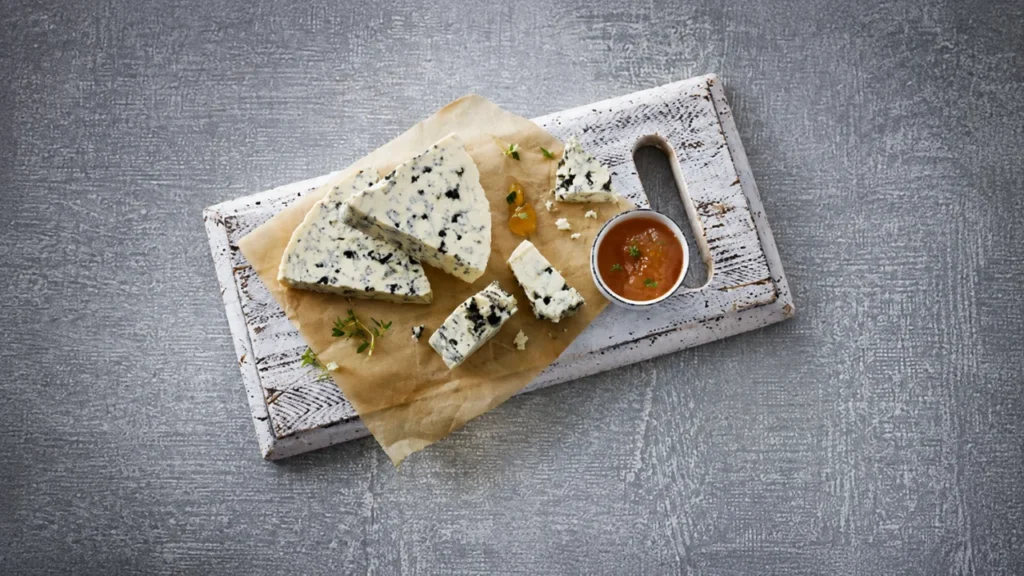
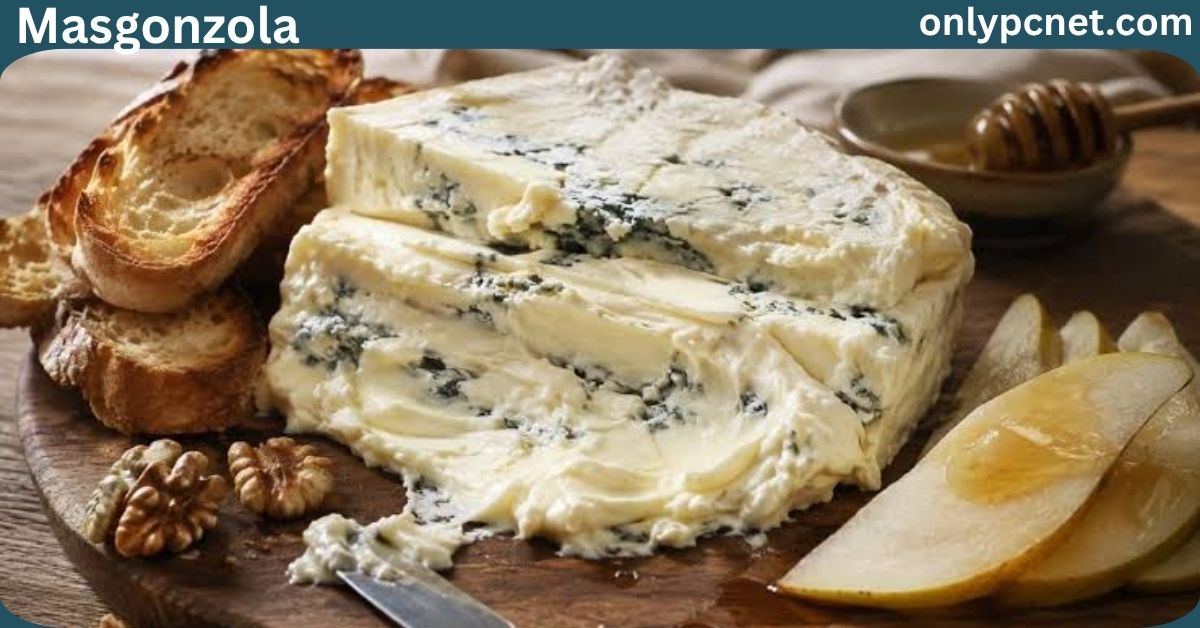
Some versions are layered rather than completely blended. A product may contain visible sections of white mascarpone and blue-veined Gorgonzola. Other versions may have a more uniform or marbled appearance.
Because there is no single universal recipe for every product called Masgonzola, consumers should not assume that every version will taste or look exactly the same.
Is Masgonzola a Real Cheese?
Yes, Masgonzola is associated with real food products and culinary preparations, but there is an important distinction.
Masgonzola is not generally recognized as a separate protected cheese variety in the same way that Gorgonzola is. Gorgonzola has protected designation status and follows defined production requirements. Masgonzola, by comparison, is better described as a cheese specialty or combination involving Gorgonzola and mascarpone.
This distinction matters because some websites describe Masgonzola as if it were an ancient Italian cheese with its own independent history, aging system, and protected identity. Those claims should be treated carefully.
There is stronger evidence for describing Masgonzola as a Gorgonzola-and-mascarpone preparation than for describing it as an entirely separate historic cheese.
In simple terms, Masgonzola is real, but its identity is different from that of traditional Gorgonzola.
Is Masgonzola the Same as Gorgonzola?
No. Masgonzola and Gorgonzola should not be treated as the same product.
Gorgonzola is a traditional Italian blue cheese. It has a distinctive identity and protected production status. Masgonzola commonly adds mascarpone to Gorgonzola, creating a softer and creamier result.
Also Read: AdultsRach: Complete Guide to the Online Search and Content Discovery Platform
The easiest way to understand the difference is to think about their main ingredients.
Gorgonzola is the blue cheese component.
Mascarpone is the creamy component.
Masgonzola brings those two characteristics together.
This means someone who already enjoys Gorgonzola but wants a softer texture may find a Masgonzola-style product more approachable.
Why Is It Called Masgonzola?
The name Masgonzola appears to be a blend of “mascarpone” and “Gorgonzola.”
The first part resembles “mas” from mascarpone, while the second part resembles “gonzola” from Gorgonzola. Together, they create the memorable term Masgonzola.
This type of name formation is common in food. Producers, recipe writers, and consumers sometimes combine names when two ingredients are strongly connected in a dish.
However, it is better not to assume that the name proves a particular historical story.
There does not appear to be strong evidence showing one universally accepted inventor of the term or one exact date when Masgonzola was first created.
Some online descriptions also make different claims about the history of Masgonzola. For accurate food writing, it is safer to separate documented culinary usage from unsupported stories about an ancient or completely independent cheese tradition.
What Does Masgonzola Taste Like?
Masgonzola usually has a rich, creamy, savory taste with a mild blue-cheese character.
Gorgonzola contributes the stronger flavor. Depending on the product, this can include salty, tangy, earthy, or slightly sharp notes.
Mascarpone changes the experience by adding richness and softness. It does not have the same strong blue-cheese flavor, so it can make the finished product feel smoother and more balanced.
For people who find some blue cheeses too intense, this combination can be easier to enjoy.
The flavor can vary considerably between products. A version containing more Gorgonzola may taste stronger and saltier. A version containing more mascarpone may taste milder and creamier.
This is one reason shoppers should read the product label rather than relying only on the name.
What Does Masgonzola Look Like?
Masgonzola can have a distinctive appearance because it may combine the pale color of mascarpone with the blue or blue-green veins associated with Gorgonzola.
Some products may appear layered. In these versions, the white and blue sections can be easy to see when the cheese is cut.
Other versions may look more blended or marbled.
The texture is generally soft and creamy rather than hard and crumbly. This makes Masgonzola different from many firm aged cheeses.
The exact appearance depends on the producer and preparation method, so there is no single visual design that every Masgonzola product must have.
Masgonzola Texture and Consistency
Texture is one of the main reasons people are interested in Masgonzola.
Traditional blue cheeses can range from soft and creamy to firm and crumbly. Mascarpone, however, is known for its smooth and rich consistency.
When mascarpone is combined with Gorgonzola, the result can be especially soft and spreadable.
A Masgonzola-style product may work well on bread, crackers, crostini, or other foods where a creamy cheese is useful.
The texture can also make it useful in cooking. It can melt or soften into warm foods and become part of a creamy sauce.
Still, consumers should remember that different manufacturers can use different ratios and preparation methods. There is no single universal Masgonzola formula.
Masgonzola vs. Gorgonzola
Masgonzola and Gorgonzola are closely related but not identical.
Gorgonzola is the traditional blue cheese. It has a more clearly defined identity and protected status.
Masgonzola generally refers to a preparation that combines Gorgonzola with mascarpone.
The biggest practical difference is texture. Masgonzola is usually creamier because of the mascarpone.
The flavor can also be milder. Mascarpone helps reduce the sharpness that some people associate with blue cheese.
Gorgonzola can be enjoyed by itself on a cheese board, while Masgonzola is particularly useful when someone wants the flavor of blue cheese with additional creaminess.
Neither product is automatically better. The choice depends on personal taste and how the cheese will be used.
Masgonzola vs. Mascarpone
Mascarpone and Masgonzola are also very different products.
Mascarpone is a mild, soft, creamy dairy product. It is widely used in desserts and savory foods.
Masgonzola has the same creamy quality but adds Gorgonzola, which gives it a stronger savory and blue-cheese character.
Mascarpone works especially well in foods where a mild creamy base is wanted.
Masgonzola works better when a dish needs both creaminess and a noticeable cheese flavor.
For example, mascarpone is strongly associated with desserts such as tiramisu, while Masgonzola is more naturally suited to savory dishes such as pasta, risotto, sauces, bread toppings, and appetizers.
Is Masgonzola a Blue Cheese?
Masgonzola can be described as a blue-cheese-based cheese specialty because Gorgonzola is the blue-cheese component.
However, calling it simply a traditional blue cheese can create confusion.
The important detail is that Masgonzola normally combines Gorgonzola with mascarpone. The blue-veined character comes from Gorgonzola, while the soft and creamy quality comes from mascarpone.
Therefore, a simple description is that Masgonzola is a creamy Gorgonzola-and-mascarpone specialty.
How Is Masgonzola Made?
There is no single official production method that applies to every product called Masgonzola.
In general, the basic idea is to combine Gorgonzola and mascarpone.
Some products can be made with layers of the two cheeses. Other preparations can mix them more closely.
A layered version may show white mascarpone alongside or between portions of Gorgonzola. This creates a visually interesting product while keeping the characteristics of both cheeses.
A more blended version may have a smoother appearance and more evenly distributed flavor.
The proportions can also differ. Some commercial examples use approximately equal amounts of the two cheeses, but that should not be treated as a universal rule for all Masgonzola products.
Does Masgonzola Have a Protected Designation?
Masgonzola should not be confused with Gorgonzola’s protected identity.
Gorgonzola has a protected designation and established production rules. Masgonzola does not have the same separate protected designation identified in the available references.
This means the term can be used more flexibly to describe a combination of mascarpone and Gorgonzola.
For consumers, this is useful information because a product’s name alone does not necessarily tell you the exact recipe.
When buying Masgonzola, look at the ingredients, manufacturer information, country of origin, storage instructions, and other information printed on the package.
Where Did Masgonzola Come From?
The exact history of the term Masgonzola is not as clearly documented as the history of Gorgonzola.
Gorgonzola has a long and well-known history as an Italian blue cheese. Masgonzola is more accurately connected with the culinary combination of Gorgonzola and mascarpone.
Some online articles describe Masgonzola as an ancient cheese. Others describe it as a newer culinary creation. Because these claims do not always agree, readers should be careful about accepting a precise origin story without reliable evidence.
The most useful fact is the culinary meaning of the term today.
When people search for Masgonzola, they are usually trying to understand a cheese associated with Gorgonzola and mascarpone.
Why Has Masgonzola Become a Search Topic?
One reason is the unusual name.
Masgonzola sounds like a familiar Italian cheese but is not nearly as common in everyday American food vocabulary.
This creates curiosity.
People may see the word in a recipe, food article, specialty cheese listing, social media post, or menu and search for its meaning.
Another reason is the growing interest in specialty cheeses.
American consumers have access to a much wider range of international cheeses than many people did in the past. Blue cheeses, soft cheeses, European cheeses, and specialty cheese combinations are increasingly common in supermarkets, restaurants, and specialty food stores.
Search engines also make unfamiliar food names more visible. A person may see one unfamiliar term and quickly search for it.
That can cause a niche culinary word to receive more attention than it previously had.
How to Eat Masgonzola
Masgonzola can be eaten in several simple ways.
One of the easiest methods is to serve it with bread or crackers. Its creamy texture makes it suitable for spreading.
It can also be added to a cheese board. Pairing it with other cheeses gives guests different textures and flavors to try.
Fresh fruit can provide a sweet contrast to the salty and savory cheese. Pears, apples, grapes, and figs are useful choices.
Nuts can also work well because their crunchy texture contrasts with the softness of the cheese.
Masgonzola can also be used in warm foods, where its creamy texture becomes especially useful.
Masgonzola on a Cheese Board
A cheese board is one of the simplest ways to enjoy Masgonzola.
Because it is soft and flavorful, it can provide a contrast to harder cheeses.
Try serving it with:
- Crackers
- Baguette slices
- Crostini
- Pears
- Apples
- Grapes
- Figs
- Walnuts
- Pecans
- Almonds
- Dried fruit
Sweet foods can balance the salty and savory character of blue cheese.
The goal is not to use too many strong flavors at the same time. A few simple foods can allow the cheese to remain the main attraction.
Cooking With Masgonzola
Masgonzola can be useful in cooking because it combines a strong cheese flavor with a creamy texture.
Also Read: Woeken: Meaning, Digital Identity, Online Use, Safety, and Internet Context
It can be stirred into pasta sauces to create a rich finish.
It can also be used in risotto. The cheese can add creaminess and savory depth while reducing the need for several separate dairy ingredients.
Another option is to use it as a topping for bread or crostini.
It may also work with pizza, depending on the desired flavor.
The important point is that Masgonzola does not need to be treated as a cheese that is only eaten cold. Its creamy qualities make it suitable for many cooked dishes.
Masgonzola in Pasta
Pasta is a natural pairing for a creamy blue-cheese-style ingredient.
Masgonzola can be melted into a sauce and combined with pasta.
The cheese can provide saltiness and savory flavor while the mascarpone component contributes creaminess.
Simple additions such as black pepper, walnuts, spinach, mushrooms, or roasted vegetables can create different flavor combinations.
Because the cheese can be rich, a small amount may be enough to give the dish a noticeable flavor.
This is also helpful when cooking for people who do not normally enjoy very strong blue cheese.
Masgonzola in Risotto
Risotto is another dish where Masgonzola can work well.
Risotto already has a creamy texture, so a soft cheese can blend naturally into the rice.
Masgonzola can add both creaminess and a deeper savory taste.
It can be especially useful toward the end of cooking, when cheese is commonly added to finish a risotto.
Because Gorgonzola can be salty, it is wise to taste the dish before adding extra salt.
Masgonzola on Pizza
Masgonzola can also be considered for pizza.
Its strong cheese character can work well with ingredients that provide sweetness or freshness.
Pear, caramelized onion, mushrooms, walnuts, spinach, and roasted vegetables are examples of ingredients that can complement a creamy blue-cheese flavor.
However, because Masgonzola is rich, it does not always need to cover the entire pizza.
Using it as one of several toppings can create a more balanced result.
What Foods Pair Well With Masgonzola?
Masgonzola pairs well with foods that contrast with its creamy and savory qualities.
Good options include:
- Pears
- Apples
- Grapes
- Figs
- Walnuts
- Pecans
- Honey
- Crackers
- Rustic bread
- Caramelized onions
- Mushrooms
- Pasta
- Risotto
- Roasted vegetables
Sweet ingredients can balance salty cheese.
Crunchy ingredients can balance a soft texture.
Mild foods can allow the cheese flavor to stand out without becoming overwhelming.
Is Masgonzola Healthy?
Masgonzola can provide nutrients found in dairy foods, but it should not automatically be described as a health food.
Cheese can provide protein, calcium, phosphorus, and other nutrients. However, creamy cheese products can also contain significant amounts of saturated fat and sodium.
The nutritional value of Masgonzola depends on the specific product.
There is no single nutrition label that applies to every Masgonzola preparation because recipes and proportions can differ.
If you are watching sodium, saturated fat, calories, or total fat, check the Nutrition Facts label on the specific product.
A small serving can be enough because the flavor is usually rich.
Is Masgonzola Safe to Eat?
For most people, commercially produced Masgonzola can be part of a normal diet when handled and stored correctly.
Because it is a dairy product, food safety is important.
Buy cheese from reputable retailers and check the package for storage instructions and expiration or use-by information.
Keep it refrigerated.
Avoid leaving soft dairy products at room temperature for long periods.
People who are pregnant, immunocompromised, older, or otherwise at higher risk from foodborne illness should follow current food-safety guidance and pay close attention to whether the specific cheese is made from pasteurized milk.
The safest approach is to read the label and follow the manufacturer’s storage and handling instructions.
Does Masgonzola Contain Milk?
Yes. Masgonzola is a dairy-based food made from cheeses that contain milk.
People with a milk allergy should not assume that Masgonzola is safe for them.
Milk is a major food allergen in the United States, so packaged products should identify milk in their allergen information when required.
People with lactose intolerance may respond differently from people with a milk allergy. Lactose intolerance involves difficulty digesting lactose, while a milk allergy involves an immune response.
If you have a diagnosed food allergy or a medical dietary restriction, check the product label and ask a qualified health professional when necessary.
How Should Masgonzola Be Stored?
Masgonzola should generally be kept refrigerated.
Follow the storage instructions on the package because different products can have different handling requirements.
Keep the cheese properly wrapped or sealed to reduce exposure to air and other foods in the refrigerator.
A sealed container can also help prevent strong cheese odors from spreading to other foods.
If the cheese develops an unusual appearance, smell, or texture that is inconsistent with the product, check the manufacturer’s guidance before eating it.
Do not rely only on the name “Masgonzola” to determine shelf life. The exact product and packaging matter.
How Long Does Masgonzola Last?
There is no single shelf-life period for every Masgonzola product.
Shelf life depends on factors such as the ingredients, preparation method, packaging, storage temperature, and whether the package has been opened.
The package date and manufacturer’s instructions should be the primary guide.
Once opened, keeping the cheese well sealed and refrigerated can help maintain quality.
If you buy Masgonzola from a specialty cheese counter without standard retail packaging, ask the seller about storage and recommended use time.
Where Can You Buy Masgonzola in the United States?
Finding Masgonzola in the United States may require some searching because it is not as common as cheddar, mozzarella, or standard Gorgonzola.
Possible places to check include specialty cheese shops, Italian food stores, gourmet grocery stores, larger supermarkets, and online specialty food retailers.
The name on the package may not always be “Masgonzola.”
Some products may instead use descriptions such as “Gorgonzola and Mascarpone,” “Gorgonzola e Mascarpone,” or another producer-specific name.
This is important for shoppers. If you search only for the exact word Masgonzola, you may miss products that contain the same basic combination but are marketed under a different name.
What Should You Look for When Buying Masgonzola?
Start by checking the ingredient list.
Look for Gorgonzola and mascarpone or the equivalent ingredients described on the label.
Next, check the storage instructions.
If you are looking for a stronger blue-cheese flavor, choose a product where Gorgonzola is a prominent ingredient.
If you prefer a softer and milder flavor, a creamier preparation may be a better choice.
Also check the package for information about milk, allergens, country of origin, serving size, and nutrition.
A reputable retailer should be able to provide basic information about the product.
Common Misunderstandings About Masgonzola
Masgonzola creates several common misunderstandings because the word sounds like a traditional cheese name.
One misconception is that Masgonzola is simply another spelling of Gorgonzola.
It is not.
Gorgonzola is the established name of the Italian blue cheese. Masgonzola is generally used for a Gorgonzola-and-mascarpone combination.
Another misconception is that every Masgonzola product follows one exact recipe.
That is also not necessarily true. Different producers can use different proportions and preparation methods.
A third misconception is that Masgonzola must have a long ancient history.
The available evidence supports caution here. The culinary use of the term is real, but its history as a separate protected cheese is not established in the same way as Gorgonzola’s history.
Masgonzola and Online Food Information
The internet can make unfamiliar foods easier to discover, but it can also create confusion.
When a word becomes popular online, different websites may give completely different explanations.
This is especially important with Masgonzola because some websites describe it as a separate blue cheese, while others describe it as a Gorgonzola-mascarpone combination. Current culinary references provide stronger support for the combination explanation.
Readers should therefore look for specific evidence.
A useful source should identify what the product contains and explain how the information was established.
A website that makes dramatic historical claims without identifying a reliable producer, food organization, or other evidence should be treated carefully.
This is a good example of why search results should be evaluated rather than accepted automatically.
How to Tell if a Masgonzola Claim Is Reliable
There are several simple questions consumers can ask.
First, does the source identify actual ingredients?
Second, does it distinguish Masgonzola from Gorgonzola?
Third, does it provide information from a producer, established recipe source, or recognized food organization?
Fourth, does it avoid making unsupported claims about ancient origins or official classifications?
Fifth, does the information match the product label?
These questions are useful for many unfamiliar foods, not just Masgonzola.
A food name can sound authentic without automatically having protected legal status.
Why Masgonzola Can Be Appealing to Blue Cheese Beginners
Blue cheese can be intimidating for people who are not used to its aroma or flavor.
Masgonzola can offer a gentler introduction because the mascarpone component can make the overall product smoother and creamier.
Instead of experiencing only the strong blue-cheese flavor, a person also gets a mild dairy richness.
This can make it useful for cheese boards and recipes where a softer flavor is preferred.
That does not mean every Masgonzola product will be mild. Gorgonzola remains an important part of the combination, so the final flavor can still be clearly blue-cheese-like.
Is Masgonzola Worth Trying?
For people who enjoy creamy cheeses or want to explore blue cheese, Masgonzola can be worth trying.
Its biggest advantage is the balance between two different characteristics.
Gorgonzola contributes personality and flavor.
Mascarpone contributes softness and richness.
The combination can be used in both simple and more elaborate foods.
It can be spread on bread, served with fruit, added to pasta, melted into risotto, or used as part of an appetizer.
Its flexibility is one of its strongest qualities.
Masgonzola for American Home Cooks
For home cooks in the United States, Masgonzola can be treated as a specialty ingredient rather than something that must be used in complicated recipes.
A small amount can be added to pasta sauce.
It can be spread over toasted bread.
It can be combined with pears and walnuts for a simple appetizer.
It can also be mixed into a warm dish when a creamy blue-cheese flavor is wanted.
The key is moderation.
Because both cheese components are rich, a little can add a lot of flavor.
Masgonzola and Gorgonzola: Which Should You Choose?
Choose Gorgonzola if you want the traditional Italian blue-cheese experience.
Choose Masgonzola if you want a softer, creamier combination that includes Gorgonzola.
Choose mascarpone if you want a mild and creamy dairy ingredient without the stronger blue-cheese character.
The best choice depends on the dish and your personal taste.
There is no need to consider one product universally better than another.
Frequently Asked Questions About Masgonzola
1. Can Masgonzola be used instead of cream cheese?
Masgonzola may work in some recipes where a rich spreadable cheese is needed, but it should not be considered a direct replacement for ordinary cream cheese in every recipe. Its Gorgonzola component gives it a stronger savory and blue-cheese flavor.
2. Can you freeze Masgonzola?
Freezing may affect the texture of soft cheese, so it is generally better to follow the manufacturer’s instructions. If a package does not recommend freezing, keeping the product refrigerated is the safer approach for maintaining its intended texture and quality.
3. Is Masgonzola suitable for a vegetarian diet?
This depends on the specific product and the ingredients used to make the Gorgonzola and mascarpone. Some cheeses may use animal-derived rennet. Vegetarians should check the product label or contact the manufacturer if this matters for their diet.
4. Does Masgonzola melt well?
Masgonzola can soften and melt into warm foods because of its creamy composition. Its performance can vary depending on the particular product, so it is best suited to dishes where a creamy cheese texture is desired rather than recipes requiring a very specific melting behavior.
5. Can Masgonzola be used in desserts?
It is possible to experiment with Masgonzola in sweet-and-savory desserts, especially when paired with ingredients such as pears, figs, honey, or nuts. However, its blue-cheese flavor makes it much more naturally suited to savory dishes than to traditional desserts.
Conclusion
Masgonzola is an interesting cheese term that can be confusing because it sounds like the name of a separate traditional Italian cheese. The clearest modern explanation is that Masgonzola generally refers to a combination of Gorgonzola and mascarpone. Gorgonzola supplies the blue-cheese character, while mascarpone adds a soft, rich, and creamy quality.
It is important not to confuse Masgonzola with Gorgonzola itself. Gorgonzola has an established protected identity, while Masgonzola is better understood as a cheese specialty or culinary combination rather than a separately protected cheese variety.
For U.S. consumers, the name may not always appear directly on a package. Similar products may be labeled as Gorgonzola with Mascarpone or Gorgonzola e Mascarpone. Checking the ingredient list and product information is therefore more useful than relying only on the name.
Masgonzola can be used on cheese boards, with fruit and nuts, in pasta, risotto, sauces, appetizers, bread toppings, and other savory foods. Its combination of bold cheese flavor and creamy texture makes it an appealing option for people who want to explore blue cheese without choosing a very intense product.
Most importantly, consumers should evaluate information about unfamiliar foods carefully. Not every website gives the same explanation, and a memorable name does not automatically mean a food has a separate historic or protected identity. Based on current culinary references, Masgonzola is best understood as a creamy Gorgonzola-and-mascarpone specialty with a distinctive place in modern food culture.