ABS Testauslösung: Complete Guide to Testing an ABS Avalanche Airbag
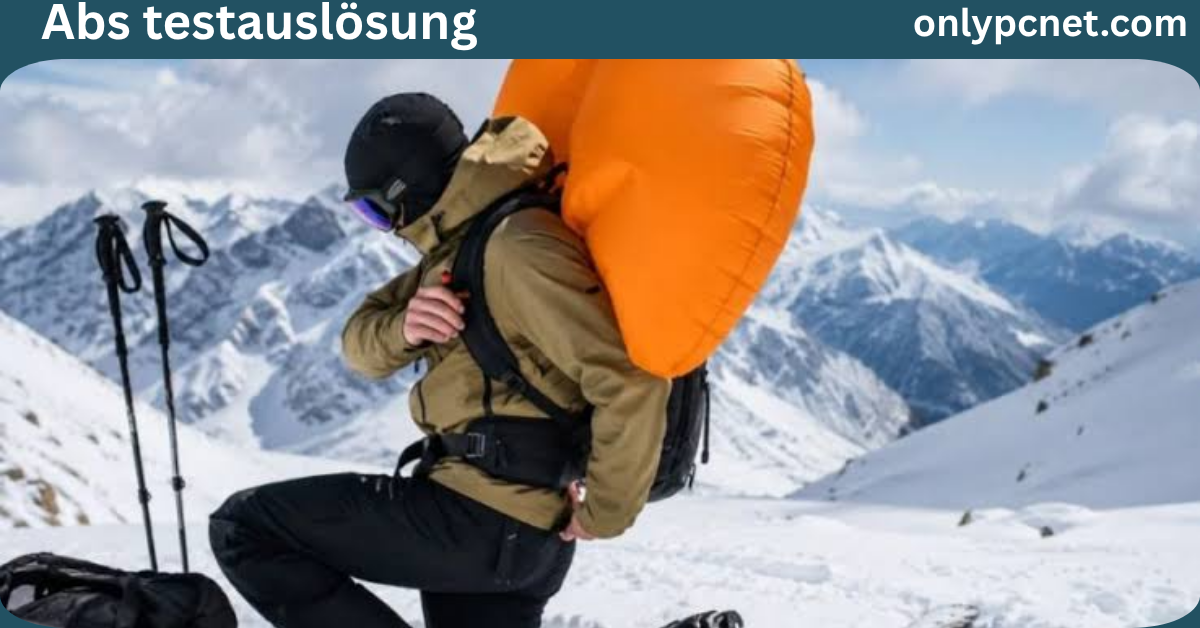
An ABS testauslösung is a test activation of an ABS avalanche airbag system. It is used to check whether the release system works correctly and to help the user practice the movement needed to activate the avalanche airbag in an emergency.
For backcountry skiers, snowboarders, and other winter travelers who use avalanche safety equipment, knowing how the system works is an important part of preparation. A test activation is not simply a mechanical check. It also helps the user become familiar with the release handle, the activation process, and the physical response of the backpack.
ABS recommends a training release with a filled cartridge before each season. The company also recommends a more complete service at regular intervals. Current ABS information states that a general service check is recommended every three years, while a training activation should be performed before each season.
This guide explains ABS Testauslösung in simple English, including what it means, why it matters, how ABS systems work, what happens during a test activation, cartridge considerations, maintenance, common mistakes, and important safety points.
What Does ABS Testauslösung Mean?
The German term “ABS Testauslösung” can be translated as “ABS test activation” or “ABS test deployment.”
The word “Testauslösung” refers to activating the release mechanism for testing or training purposes. In an avalanche airbag backpack, the release mechanism is connected to an airbag inflation system. When properly activated, the system causes the airbags to inflate.
The purpose of an ABS test activation is mainly twofold:
- To check that the system can be activated.
- To practice reaching and pulling the release handle.
The second point is especially important. In an emergency, a person may have very little time to react. The release handle should therefore be familiar and easy to locate without having to think about its position.
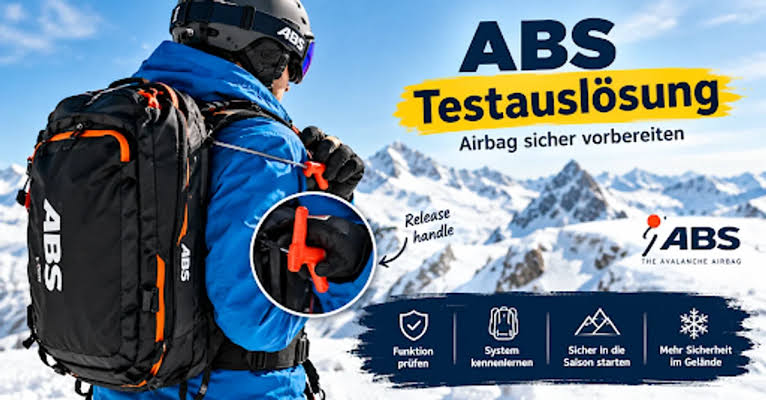
ABS itself recommends training activation before each season because it allows users to check the system and practice the movement required to pull the release handle.
Also Read:Crackstube: Understanding the Website, Online Presence, and Safety
What Is an ABS Avalanche Airbag?
An ABS avalanche airbag is a safety device designed for people who travel in avalanche terrain.
It is usually integrated into or attached to a specialized backpack. The system contains one or more airbags, an inflation mechanism, a release handle, and a gas cartridge or another approved inflation system, depending on the model.
When the system is activated, the airbag inflates rapidly.
The basic idea is different from an ordinary backpack. An avalanche airbag is designed to help increase a person’s effective volume during an avalanche. This can support the “inverse segregation” effect, sometimes described as the “Brazil nut effect,” in which larger objects tend to remain closer to the surface of a moving granular mass.
An avalanche airbag is not a guarantee of survival. It does not prevent avalanches, and it does not replace avalanche education, route planning, weather assessment, rescue equipment, or good decision-making.
A complete avalanche safety setup normally includes appropriate training and equipment such as an avalanche transceiver, probe, shovel, and suitable protective equipment.
Why Is an ABS Testauslösung Important?
An avalanche airbag is an emergency device. Simply owning one does not mean that it will automatically be used correctly during an avalanche.
A test activation provides an opportunity to discover problems before the equipment is needed.
For example, a user may discover that:
- the release handle is positioned differently than expected
- the system was not correctly activated
- the cartridge is not ready for use
- the user does not know how the release feels
- the backpack needs inspection
- the system requires service
- the user has forgotten the correct activation movement
Finding these problems at home or before a trip is much safer than discovering them during an avalanche.
ABS describes the training release as a way to check system function while also practicing the release movement.
How Does an ABS Avalanche Airbag Work?
Different ABS products can use different release technologies, so users should always follow the instructions for their exact model.
Some ABS systems use a cartridge-based mechanical activation system. In the ABS SOLID system, for example, pulling the handle activates a release mechanism that creates a pressure wave. This causes a piercing mechanism to release gas from the cartridge. The gas then moves through the inflation system and helps inflate the airbags. ABS states that its SOLID system is designed to inflate the airbags within approximately three to four seconds.
This process happens very quickly.
The important components generally include:
The Release Handle
The release handle is the part the user pulls to activate the system.
Its location is important because the user needs to be able to reach it quickly while wearing gloves and winter clothing.
The Cartridge
Depending on the ABS system, a cartridge contains compressed gas used to inflate the airbag.
Cartridge type and compatibility depend on the specific product. Users should never assume that every ABS cartridge works with every ABS backpack.
The Piercing or Inflation Mechanism
This part connects the release system with the cartridge and allows the stored gas to enter the airbag system.
The Airbag
The airbag is the large inflatable component designed to provide additional volume during an avalanche.
The Backpack and Harness
The backpack must stay correctly positioned on the user. Straps, buckles, and other components are therefore important parts of the overall safety system.
How to Perform an ABS Testauslösung
The exact procedure depends on the ABS model and release system.
That distinction matters because ABS has used different technologies over time. A procedure that applies to one model may not apply to another.
The manufacturer’s instructions for the specific model should therefore always take priority.
For compatible systems, ABS explains that a training activation can be performed with a filled cartridge by installing the cartridge and pulling the release handle. After the activation, the cartridge can be refilled or replaced through the appropriate service process.
A general preparation process looks like this:
1. Read the Correct Manual
First identify the exact ABS backpack and release system.
Check the manufacturer’s current instructions for that model before performing a test activation.
ABS provides product instructions and quick-start documents for several systems through its official download area.
2. Inspect the Backpack
Look over the backpack before testing.
Check the straps, buckles, airbag compartment, visible fabric, release handle, and other accessible components.
If anything looks damaged, do not assume that a successful activation means the entire system is safe.
3. Check the Cartridge
Make sure the cartridge is the correct type for the system and is within the manufacturer’s requirements.
ABS also provides cartridge weight-check guidance. Its current FAQ states that the cartridge should be weighed without its cap and that a deviation of more than 5 grams from the specified weight means the cartridge should not be used.
4. Confirm System Readiness
Some ABS systems have a visual indicator showing whether the system is activated and ready.
For systems with the relevant activation indicator, ABS states that a green display indicates an activated system, while a red display indicates that the system needs to be activated before use.
5. Perform the Training Activation
Follow the instructions for your specific system.
With compatible cartridge-based systems, the filled cartridge is installed and the release handle is pulled to activate the airbag.
Do not improvise the procedure.
6. Observe the Result
The airbag should deploy according to the characteristics of the particular system.
After activation, inspect the system rather than immediately assuming everything is perfect.
Look for obvious damage, unusual behavior, or signs that the airbag did not inflate normally.
7. Arrange Refill or Service
A cartridge used for a normal test activation may need to be refilled or replaced.
ABS offers refill and service options for its systems. Its current information specifically describes refilling after a test activation.
Can You Test an ABS Airbag Without Using a Cartridge?
Some ABS systems allow users to practice the release movement without actually inflating the airbag.
This is different from a full functional test.
For example, ABS describes a test option for the EASYTECH system in which the user can practice the release handle without a cartridge installed. The system provides audible and tactile feedback when the release mechanism has been activated, and the indicator changes to show the system status.
This can be useful because users can practice the physical movement without consuming a cartridge.
However, a dry practice does not provide exactly the same information as a complete deployment with a filled cartridge.
A useful distinction is:
| Type of test | Main purpose |
| Handle practice | Learn the release movement |
| Dry activation | Check the release mechanism on compatible systems |
| Full test activation | Test actual airbag deployment |
| Professional service | Inspect the wider system |
Users should check which test options are supported by their exact ABS model.
How Often Should You Perform an ABS Testauslösung?
ABS currently recommends a training activation before each season.
The reason is simple: avalanche equipment may sit unused for months. During that period, users can forget how the release mechanism feels or how the system is prepared.
A yearly check also creates an opportunity to inspect the backpack and identify problems before the season begins.
ABS separately recommends sending the airbag backpack for a larger service check every three years.
These are not the same thing.
A seasonal test activation is a user-level check and training exercise.
A professional service is a more detailed inspection.
ABS Testauslösung vs. Professional Service
One common misunderstanding is that a successful test activation means the backpack does not need professional maintenance.
That is not necessarily true.
A test activation primarily shows that the release and inflation process can operate under the conditions of the test.
A professional inspection can look at additional components.
ABS says its larger service includes inspection of parts such as the backpack straps, buckles, airbag compartments, Velcro fasteners, piercing unit, hoses, cables, and other components. After an airbag activation, the airbag wings, release valve, inflation system, and material tightness can also be checked.
This illustrates an important safety principle:
A working trigger does not automatically prove that every part of the system is in perfect condition.
What Happens After an ABS Testauslösung?
After a full activation, the airbag needs to be handled according to the manufacturer’s instructions.
The cartridge may be empty or require professional refill, depending on the system.
ABS offers refill services after test activation. Current ABS information says that users can send the relevant cartridge and release components to the appropriate service center for refilling.
Do not assume that an empty cartridge can simply be reused.
Do not modify a cartridge.
Do not attempt to refill a pressurized cartridge using an unapproved method.
The cartridge is a pressure component, so it should be treated as safety equipment rather than as an ordinary accessory.
Why Practicing the Release Handle Matters
One of the most useful parts of ABS Testauslösung is the opportunity to practice the release movement.
Imagine entering avalanche terrain several times during a winter season.
Also read:Domikyo.com: A Complete Guide to the Multi-Niche Information Platform
You may wear thick gloves.
You may have multiple layers of clothing.
You may be moving quickly.
Visibility may be poor.
Snow may be blowing around you.
In a stressful situation, searching for a release handle can waste valuable time.
Repeated training helps make the movement more familiar.
This does not guarantee a successful response in an emergency, but it can reduce the amount of conscious thought needed to locate and operate the handle.
ABS specifically describes this training benefit when explaining its seasonal test activation recommendation.
Common Mistakes During an ABS Testauslösung
A test activation is most useful when it is performed carefully.
Several mistakes can reduce its value.
Using the Wrong Cartridge
Different ABS systems may require different cartridges.
Never assume that a cartridge from another backpack or another generation of equipment is compatible.
Skipping the Manual
Older and newer ABS systems may have different release technologies.
Always identify the exact model.
Treating Dry Practice as a Full Test
A handle-only practice may show that the release mechanism responds, but it does not necessarily test the complete inflation system.
Forgetting to Refill
A cartridge used during a full test activation may no longer be ready for the next trip.
This is one of the easiest mistakes to make.
Ignoring Damage
A successful deployment does not eliminate the need to inspect the airbag and backpack.
Testing Only Once
Performing one test several years ago does not replace seasonal training.
ABS recommends a training release before each season.
How to Check an ABS Cartridge
The cartridge is an important part of a cartridge-based avalanche airbag system.
ABS provides a specific weight-check method for its cartridges.
According to the company’s current FAQ, the cartridge should be weighed without the cap. If its weight differs by more than 5 grams from the stated specification, it should not be used and should be replaced.
This is a useful example of why manufacturer-specific instructions matter.
Do not apply the weight specification of one cartridge to another manufacturer’s product.
Do not assume that visual appearance alone confirms cartridge condition.
How Long Does an ABS System Last?
Equipment lifespan depends on the model, use, maintenance, storage, and condition.
ABS currently states that, when its recommended maintenance intervals are followed and the system is used as directed, the ABS system itself can generally be expected to have a service life of about 10 years based on an average of 50 use days per season. ABS also states that it can no longer offer service or guarantee safe use after 10 years.
This information is important for people buying used avalanche equipment.
A backpack that looks almost new may still have an older base system or cartridge.
When buying used equipment, check:
- the model
- manufacturing date
- cartridge age
- service history
- previous deployments
- visible condition
- availability of replacement parts
- compatibility with current ABS components
What If an ABS Airbag Has Already Been Deployed in an Avalanche?
A real avalanche deployment deserves more attention than an ordinary training activation.
The system may have experienced significant mechanical stress.
The backpack may have been exposed to snow, rocks, impacts, pulling forces, and abrasion.
ABS recommends a complete system check after an avalanche operation. Its Service Large information explains that the condition of multiple components can be inspected after an activation.
Do not assume that because the airbag inflated successfully during the avalanche, it is automatically ready for another trip.
A post-deployment inspection is an important part of responsible equipment management.
ABS Testauslösung and Avalanche Safety
It is important to understand what an avalanche airbag can and cannot do.
An avalanche airbag is a risk-reduction tool.
It is not an avalanche prevention device.
It does not tell you whether a slope is safe.
It does not replace avalanche forecasts.
It does not replace a beacon, shovel, or probe.
It does not eliminate the need for avalanche education.
The best use of an avalanche airbag is therefore part of a broader safety approach.
Before entering avalanche terrain, users should understand local avalanche conditions, terrain, weather, snowpack information, travel techniques, rescue procedures, and the limitations of their equipment.
ABS Airbag Safety Standards
Avalanche airbags are safety equipment and are subject to technical requirements.
ABS explains that EN 16716:2017 establishes safety requirements and test methods for avalanche airbag systems. The company also notes that the standard is currently undergoing revision and that some values and content may be updated.
The standard covers areas such as:
- pressure testing
- airbag impact testing
- carrying-system strength
- pull-off resistance
- markings
- deployment-related requirements
ABS also states that avalanche airbag systems must withstand twice the manufacturer’s specified nominal number of deployments, with a nominal number of at least 20 under the cited safety standard.
These technical tests are different from the user’s seasonal ABS Testauslösung.
A laboratory or certification test evaluates equipment against defined requirements.
A user test checks readiness and provides practical training.
What Is the Difference Between ABS Testauslösung and a Real Avalanche Deployment?
The basic activation mechanism may be similar, but the circumstances are very different.
A test activation takes place in a controlled environment.
A real deployment may occur during:
- rapid movement
- poor visibility
- high stress
- cold temperatures
- heavy snow
- uneven terrain
- an actual avalanche
The purpose of a test is therefore not to reproduce every condition of an avalanche.
Instead, it helps confirm equipment operation and gives the user an opportunity to practice.
Can an ABS Testauslösung Damage the Airbag?
A correctly performed test activation is part of the manufacturer’s recommended training and maintenance approach.
However, every full deployment places normal mechanical and operational demands on the system.
After activation, the airbag should be inspected according to the manufacturer’s instructions.
ABS specifically describes checking the airbag wings, release valve, inflation system, and material tightness as part of its larger service process.
If you notice a tear, unusual inflation behavior, leakage, damaged fabric, or another problem, stop using the equipment until it has been properly evaluated.
Can You Perform an ABS Testauslösung at Home?
Some users perform seasonal training activation themselves, following the manufacturer’s instructions.
ABS specifically recommends a training release before each season and provides information for customer-performed test activation on compatible systems.
However, “at home” does not mean “without preparation.”
The area should be appropriate for the test.
The airbag needs sufficient room to deploy.
People, pets, fragile objects, and other obstacles should be kept away from the deployment area.
The exact procedure should come from the manual for the specific model.
If you are unsure about the system, professional service is the safer option.
What Should You Do If the Airbag Does Not Deploy?
If an ABS airbag does not deploy during a test, do not assume that the problem is minor.
Possible causes can include:
- incorrect system activation
- incompatible cartridge
- cartridge problem
- incorrect assembly
- release mechanism issue
- maintenance problem
- damage to the system
The correct response is to stop and consult the manufacturer’s instructions or an authorized service provider.
Do not repeatedly pull the handle while trying random adjustments.
Do not disassemble pressurized components unless the manufacturer’s instructions specifically require and authorize the procedure.
How to Store an ABS Avalanche Airbag
Proper storage is another part of equipment care.
When the winter season ends, the backpack should be stored according to the manufacturer’s instructions.
In general, safety equipment should be kept clean and dry and protected from unnecessary heat, moisture, chemicals, and physical damage.
Avoid leaving the equipment in places where extreme temperatures can occur for long periods.
The cartridge should also be stored according to the applicable manufacturer requirements.
Always check the current manual for the specific ABS model because storage requirements can differ between systems.
ABS Testauslösung for New Users
A new user may feel uncertain about the release handle.
That is normal.
Instead of waiting until an emergency to learn the system, use the preseason period to become familiar with it.
Start by identifying:
- where the handle is located
- how it feels with gloves
- how the backpack sits on your body
- how the release mechanism works
- what the system indicator means
- how the cartridge connects
- what happens after activation
Then follow the manufacturer’s approved training process.
This turns an unfamiliar piece of equipment into something the user understands.
ABS Testauslösung for Experienced Users
Experience does not eliminate the need for testing.
Experienced skiers and snowboarders can also benefit from seasonal training because equipment changes over time.
An experienced user may also own multiple backpacks or different generations of ABS systems.
A newer release system may behave differently from an older model.
That is why the correct model-specific instructions remain important even for people who have used avalanche airbags for many years.
Also read:Voozon.com: Complete Guide to the Multi-Topic Publishing and Guest Posting Platform
Buying a Used ABS Avalanche Backpack
The ABS Testauslösung topic is also relevant when buying used equipment.
A secondhand avalanche backpack should be evaluated differently from an ordinary used backpack.
The buyer should ask about:
- purchase date
- manufacturing date
- previous owner use
- number of deployments
- cartridge age
- service history
- storage conditions
- damage
- repairs
- model number
- compatibility with current cartridges and parts
The appearance of the fabric is not enough to determine whether the system is safe.
ABS states that its service life and service availability are affected by the age of the system, with the company currently indicating that safe use and service cannot be guaranteed after 10 years.
Why Manufacturer Instructions Matter
Search results about “ABS Testauslösung” may contain instructions for several different generations of equipment.
This can create confusion.
A procedure for an EASYTECH system should not automatically be applied to an older ABS system.
Likewise, information about an electronic avalanche airbag should not automatically be applied to a mechanical cartridge system.
The safest approach is to identify the exact product first.
ABS provides manuals and quick-start documentation for several of its current and previous products through its official resources.
A Simple ABS Testauslösung Checklist
Before the winter season, users can think through a simple checklist:
Equipment Check
Confirm that the backpack, airbag, release handle, straps, and other visible components are in good condition.
Cartridge Check
Confirm that the cartridge is compatible and meets the manufacturer’s requirements.
System Check
Confirm that the system is correctly activated and ready for use.
Training Check
Practice locating the release handle and perform the appropriate training procedure.
Deployment Check
If performing a full test activation, make sure there is adequate space and follow the model-specific instructions.
Refill Check
After a full activation, arrange the appropriate refill or replacement.
Service Check
Make sure the backpack is within the recommended service interval.
This checklist is not a replacement for the manufacturer’s manual. It is simply a practical way to remember the main areas that deserve attention.
ABS Testauslösung and Travel
Avalanche airbag users may travel internationally with their equipment.
This can create additional considerations because pressurized cartridges may be subject to transportation rules.
ABS provides specific information about transporting its systems on aircraft, including information related to cartridge types and airline regulations.
Before flying, users should check current airline requirements and applicable transportation rules rather than relying on an old forum post or social media comment.
Rules can change, and different airlines may apply different procedures.
The Difference Between Information and Safety Certification
It is important to distinguish an online article from official product instructions.
An article can explain what ABS Testauslösung means.
It can explain why users perform a seasonal training release.
It can explain general concepts surrounding avalanche airbags.
But it cannot replace the manual supplied for a specific safety device.
For high-risk equipment, the manufacturer’s current instructions should always be the primary reference.
Digital Literacy When Searching for ABS Testauslösung
People searching for “ABS Testauslösung” may find videos, forum posts, social media discussions, retailer pages, and old manuals.
Not all information will be equally reliable.
Before following instructions, check:
- Is the information from ABS or an authorized service provider?
- Does it apply to your exact model?
- Is the information current?
- Does it discuss the same cartridge and release system?
- Does it conflict with the manufacturer’s manual?
This is particularly important because avalanche equipment can change significantly between generations.
An old instruction can look convincing while still being unsuitable for a newer system.
What ABS Currently Recommends
Current ABS information provides several useful points for users.
ABS recommends a training activation with a filled cartridge before each season. The purpose is both functional checking and release-handle training.
ABS also recommends a larger service check approximately every three years.
After an avalanche deployment, ABS recommends a comprehensive system check.
For compatible EASYTECH systems, ABS also describes a cartridge-free practice option that allows users to practice the release without consuming a cartridge.
These recommendations show that testing, training, and professional servicing are separate parts of responsible equipment care.
Frequently Asked Questions About ABS Testauslösung
Does an ABS Testauslösung guarantee that an avalanche airbag will work in an emergency?
No. A successful test activation provides useful information about the system at the time of testing, but it cannot guarantee future performance. Equipment can be damaged, improperly assembled, or affected by other conditions after the test. Regular inspection and manufacturer-recommended service remain important.
Should I perform another test after replacing an ABS cartridge?
The answer depends on what was replaced and what the manufacturer recommends for your particular model. A cartridge replacement does not mean that every component should automatically be activated again. Follow the current instructions for your exact system and make sure the complete setup is correctly prepared before entering avalanche terrain.
Can an ABS backpack be used after a failed test activation?
A failed activation should be treated as a reason to stop and investigate the problem. The backpack should not be considered ready for avalanche use until the cause has been identified and the system has been confirmed as safe according to the manufacturer’s instructions or by an appropriate service provider.
Does an ABS airbag need special training before a first trip?
Yes, users should understand their equipment before entering avalanche terrain. This includes knowing the location and operation of the release handle, understanding the system’s preparation requirements, and learning avalanche rescue skills. A test activation can help with equipment familiarity, but it is only one part of avalanche education.
Is an older ABS avalanche backpack automatically unsafe?
Age alone does not describe every aspect of a backpack’s condition, but age is an important factor. ABS currently states that, after 10 years, it can no longer offer service or guarantee safe use for its system under the conditions described by the manufacturer. Used equipment should therefore be checked for its exact age, model, condition, service history, and compatibility before use.
Final Thoughts
ABS Testauslösung means testing and practicing the activation of an ABS avalanche airbag system. It is useful because it can help confirm that the system operates correctly while also giving the user practical experience with the release handle.
For current ABS systems, the manufacturer recommends a training activation before each season and a larger service check at regular intervals. A full deployment can also require cartridge refill or replacement.
The most important point is to treat an avalanche airbag as serious safety equipment. Use the correct cartridge, follow the instructions for the exact model, inspect the equipment regularly, and obtain professional service when required. A test activation can improve equipment familiarity, but it should always be part of a broader avalanche-safety approach rather than a substitute for proper training and responsible decision-making.