TriDeltathon: History, Race Format, Charity Mission, and Knoxville Connection
TriDeltathon is a name connected with Knoxville, Tennessee, the University of Tennessee, Delta Delta Delta, and a long-running charitable racing tradition. For many years, this event brought together athletes, students, volunteers, and local supporters for a short-distance triathlon designed around both fitness and fundraising.
Unlike many large triathlons that use lakes, rivers, or oceans for the swimming portion, TriDeltathon was known for its indoor pool swim. The traditional race combined swimming, cycling, and running in a compact format. Participants completed a 400-meter swim, followed by a six-mile bike ride and a three-mile run.
The event was more than a sporting competition. Its charitable mission was a major part of its identity. The race was associated with fundraising for East Tennessee Children’s Hospital and Camp Eagle’s Nest, giving participants an opportunity to support children and families while taking part in an athletic challenge.
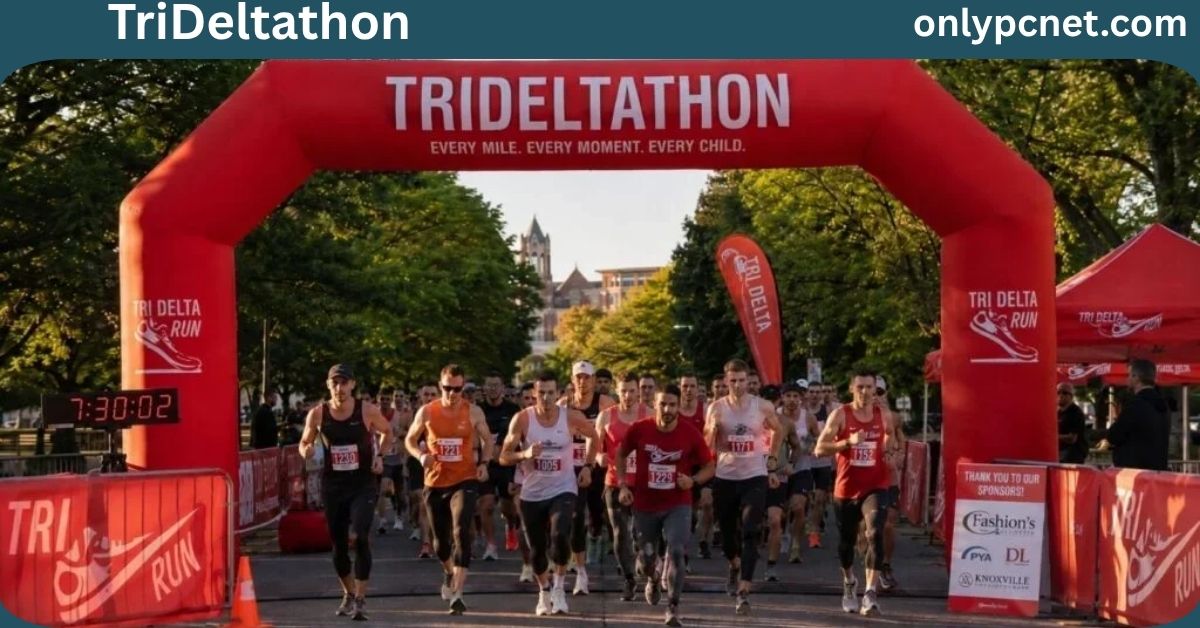
Although the original triathlon format is now part of Knoxville’s sporting history, the charitable tradition connected with Tri Delta continues through a newer running event known as TriDeltaRUN.
This article explains the history of TriDeltathon, its race format, its connection to the University of Tennessee, its charitable purpose, what happened to the original triathlon, and why people still search for information about it today.
What Is TriDeltathon?
TriDeltathon was a charity triathlon held in Knoxville, Tennessee, and associated with the University of Tennessee and the Delta Delta Delta sorority.
The traditional event had three sections:
- A 400-meter swim
- A six-mile bicycle ride
- A three-mile run
The race was designed as a relatively short triathlon. Instead of requiring participants to complete the much longer distances found in many traditional triathlons, TriDeltathon offered a compact challenge that could appeal to both experienced athletes and people interested in trying multisport racing.
One of the event’s most recognizable characteristics was its indoor swimming section. Athletes started in a swimming pool before moving to the cycling and running portions of the course.
The race also had a strong community focus. Delta Delta Delta members were involved in supporting the event, and fundraising was directed toward children’s healthcare causes.
Because of this combination of athletics, student involvement, and charity work, TriDeltathon became more than an ordinary local race. It became part of the Knoxville community’s annual sporting tradition.
What Does the Name TriDeltathon Mean?
The name TriDeltathon reflects the connection between Tri Delta and the word triathlon.
Tri Delta is the commonly used name for Delta Delta Delta, a national sorority with a chapter at the University of Tennessee. The organization played an important role in the event.
The name was therefore a natural way to connect the organization with a three-sport athletic event.
This type of naming is common with college charity events. A recognizable organization can give a race a strong identity while also helping connect students, alumni, volunteers, and community members.
Also Read: Nimedes: Meaning, Uses, Digital Relevance, and What You Should Know
For people searching online for TriDeltathon, the name can therefore lead to information about several related subjects, including triathlon, Knoxville, the University of Tennessee, Delta Delta Delta, children’s charities, and local running events.
Where Was TriDeltathon Held?
TriDeltathon was based in Knoxville, Tennessee, around the University of Tennessee campus.
The swimming portion took place at the University of Tennessee Student Aquatic Center. The cycling and running sections then moved outdoors around the university and nearby Knoxville roads and paths.
The bike course covered approximately six miles and included areas around the University of Tennessee campus and Neyland Drive.
The running section covered approximately three miles and passed familiar university landmarks, including Neyland Stadium and Thompson-Boling Arena.
This setting gave TriDeltathon a strong campus identity.
Instead of being held in an isolated location, the race took place around places that many students, alumni, athletes, and local residents already knew.
That helped create a community atmosphere and made the event feel closely connected to Knoxville.
TriDeltathon Race Distances
The traditional TriDeltathon format used relatively short distances compared with many other triathlons.
The historic race structure included:
| Race Section | Distance |
|---|---|
| Swimming | 400 meters |
| Cycling | 6 miles |
| Running | 3 miles |
These distances made TriDeltathon a short-course event.
The shorter format did not remove the challenges of triathlon. Participants still had to move between three different sports, manage their energy, and complete two transitions.
However, the distances were much less intimidating than those associated with longer triathlon formats.
That made the event an interesting option for people who wanted to experience multisport racing without committing to a long-distance competition.
The TriDeltathon Swimming Portion
The swim was one of the most distinctive features of TriDeltathon.
Rather than beginning with an open-water swim, participants swam in an indoor pool.
The historic race used individual starts rather than sending everyone into the water at the same time. Participants were generally placed according to their estimated swimming ability and entered the pool at short intervals.
This format created a very different experience from an open-water triathlon.
There were no waves or large groups fighting for position at the beginning of the swim. The pool environment also provided clear lane markings and a controlled setting.
For swimmers who preferred predictable conditions, this could make the experience more comfortable.
At the same time, swimming 400 meters still required preparation. A participant needed enough endurance to complete the distance and enough technique to maintain a steady pace.
Pool Triathlon vs. Open-Water Triathlon
Pool-based triathlons and open-water triathlons have different challenges.
An open-water race can involve:
- Waves
- Currents
- Water temperature changes
- Navigation
- Reduced visibility
- Large groups of swimmers
- Sighting requirements
A pool race usually provides:
- Clearly marked lanes
- A controlled environment
- Known pool dimensions
- Predictable water conditions
- Individual or smaller starts
This does not mean a pool triathlon is automatically easy.
The athlete still needs to swim, transition to a bicycle, cycle, transition again, and run.
The main difference is that the swimming environment is more controlled.
For beginners, that difference can be important.
The Six-Mile TriDeltathon Bike Ride
After completing the swim, participants moved to the cycling portion.
The traditional bike section was approximately six miles long.
Although six miles may sound short to an experienced cyclist, cycling immediately after swimming creates a different physical experience.
The athlete’s body has already worked hard in the water. After leaving the pool, the participant must quickly prepare for another form of exercise.
Good preparation for a short triathlon therefore includes more than simply riding a bicycle.
Athletes should become comfortable with:
- Starting and stopping safely
- Braking
- Turning
- Maintaining control
- Riding around other participants
- Using appropriate safety equipment
- Moving efficiently through transitions
A properly fitted bicycle and approved helmet are also important parts of safe race preparation.
The Three-Mile TriDeltathon Run
The final part of the traditional TriDeltathon was a three-mile run.
The course took participants through areas around the University of Tennessee campus.
The run included familiar university landmarks, helping give the event a strong Knoxville atmosphere.
Three miles is a common running distance, but running at the end of a triathlon is different from running three miles when fully rested.
By the time participants reached the run, they had already completed the swimming and cycling portions.
The legs may feel tired or heavy, and the body must adjust quickly from cycling to running.
This is why triathlon training often includes short runs immediately after cycling.
Why TriDeltathon Was Interesting for Beginners
TriDeltathon offered several characteristics that could make it appealing to people new to triathlon.
The distances were relatively short.
The swim was indoors.
The race was associated with a university community.
The charitable purpose gave participants a reason to participate beyond competition.
A first-time triathlete could therefore experience all three parts of the sport without immediately attempting the distances associated with a long triathlon.
Still, short does not mean effortless.
A participant should be comfortable swimming, cycling, and running before entering a multisport event.
Training should focus on both individual sports and the transitions between them.
TriDeltathon and the University of Tennessee
The University of Tennessee played an important role in the identity of TriDeltathon.
The race used university facilities and traveled through areas surrounding the campus.
That created a natural connection between the event and the student community.
University events can have an advantage that commercial races sometimes lack. Students can participate in organizing, volunteering, promoting, and fundraising while athletes from the surrounding community join the competition.
This creates a cycle of participation.
One group of students graduates, and another group takes over.
The event can therefore continue even though the individual people involved change over time.
This type of student-led continuity helps explain how TriDeltathon developed such a long history.
The Role of Delta Delta Delta
Delta Delta Delta, commonly known as Tri Delta, was closely connected with the event.
Members of the organization helped provide volunteer support and were involved in the charitable side of the race.
Organizing an athletic event requires a large amount of work.
Volunteers may help with:
- Registration
- Athlete check-in
- Course directions
- Water stations
- Transition areas
- Participant support
- Race-day communication
- General event organization
For students, this type of involvement can also provide valuable experience.
Event volunteers learn about teamwork, planning, communication, fundraising, and community service.
As a result, the race served both an athletic and an educational purpose.
TriDeltathon’s Charity Mission
Charity was one of the most important parts of TriDeltathon.
The event supported East Tennessee Children’s Hospital and its related charitable efforts.
The connection gave the race a meaningful local purpose.
Participants were not simply paying an entry fee to compete. Their involvement could also contribute to a cause focused on helping children and families.
The event’s charitable mission helped distinguish it from ordinary recreational races.
For some participants, finishing with a personal best may have been the main goal.
For others, the opportunity to support children’s healthcare may have been equally important.
That combination can create a strong sense of community.
Camp Eagle’s Nest and the Fundraising Tradition
Camp Eagle’s Nest has also been associated with the charitable work connected to Tri Delta in Knoxville.
The camp serves children dealing with cancer and rare blood disorders.
This type of charity connection gives fundraising events a personal and emotional purpose without requiring participants to be professional athletes.
A person can participate because they enjoy running.
Another person can participate because they enjoy triathlon.
Someone else may participate because they want to support children and families.
A successful charity event can bring all three groups together.
How Long Did TriDeltathon Continue?
TriDeltathon had a history spanning several decades.
By 2019, the event was described as being in its 35th year.
The 2020 edition was described as its 36th year.
This means the race had already developed a substantial history before its interruption.
Long-running local races are valuable because they become part of a community’s identity.
Participants may remember completing their first triathlon there.
Students may remember volunteering during college.
Families may return year after year.
That history creates memories that cannot easily be replaced by a completely new event.
What Happened to TriDeltathon in 2020?
The 2020 TriDeltathon was canceled.
The cancellation occurred during a period when the University of Tennessee had moved much of its academic activity online and normal campus activities were heavily disrupted.
Organizers were unable to secure another suitable date for the race.
Participants were given different options concerning their registration, including supporting the charitable cause with their entry fee, transferring their registration, receiving credit toward another qualifying race, or requesting a refund.
The cancellation was a major interruption for an event that had already been operating for many years.
It also became an important turning point in the event’s history.
Is TriDeltathon Still Held Today?
The original TriDeltathon triathlon is no longer represented by the same current race format found in its historical listings.
Instead, the related charitable tradition has continued through TriDeltaRUN.
TriDeltaRUN is a 5K running event connected with Delta Delta Delta and the same broader community and charity mission.
This distinction is important for anyone searching for TriDeltathon today.
A person looking for a swimming, cycling, and running event should not assume that a current TriDeltaRUN registration page is the same as the historic TriDeltathon.
The two events are connected by their history and charitable purpose, but their athletic formats are different.
What Is TriDeltaRUN?
TriDeltaRUN is a newer running event connected with the Tri Delta community in Knoxville.
Unlike TriDeltathon, it is a 5K.
That means participants only need to complete the running portion.
There is no swimming section and no cycling section.
The newer event continues the broader fundraising tradition and maintains the connection with children’s charitable causes.
In this sense, TriDeltaRUN can be viewed as a continuation of the community mission rather than a direct copy of the original triathlon.
TriDeltathon vs. TriDeltaRUN
The differences are easy to understand.
| Feature | TriDeltathon | TriDeltaRUN |
|---|---|---|
| Event type | Triathlon | 5K run |
| Swimming | Yes | No |
| Cycling | Yes | No |
| Running | Yes | Yes |
| Traditional swim | 400 meters | Not applicable |
| Traditional bike | 6 miles | Not applicable |
| Traditional run | 3 miles | 5K |
| Tri Delta connection | Yes | Yes |
| Knoxville connection | Yes | Yes |
| Charity mission | Children’s healthcare | Children’s healthcare |
The biggest difference is the number of sports.
TriDeltathon was a multisport event.
TriDeltaRUN is a running event.
Understanding that difference prevents confusion when researching old and new race information.
Also Read: Coyyn: A Complete Guide
Why Did the Triathlon Become a 5K?
The available history clearly shows that the 2020 TriDeltathon was canceled and that a later TriDeltaRUN 5K became part of the charitable tradition.
However, there is not enough reliable public information to state with certainty that one specific factor caused the permanent change from a triathlon to a 5K.
Several practical issues can affect the format of a university charity event, including facility availability, volunteer requirements, event complexity, costs, safety planning, and participant demand.
Those possibilities should not be presented as confirmed explanations without an official statement.
The safest conclusion is that the original triathlon was interrupted in 2020 and that the related charity tradition later continued in a simpler running format.
Why a 5K Can Be Easier to Organize Than a Triathlon
A triathlon requires infrastructure for three different sports.
Organizers must manage:
- A swimming facility
- Pool scheduling
- Bicycle access
- Road or trail planning
- Transition areas
- Bicycle safety
- Running routes
- Additional volunteers
- More equipment
- More complicated athlete movement
A 5K generally has fewer logistical requirements.
The race still requires planning, safety measures, timing, volunteers, and course management, but there is no need for a swimming facility or bicycle transition area.
For a student-led charity event, that difference can be significant.
A 5K can potentially allow the organization to focus more resources on participation and fundraising.
Why the History of TriDeltathon Still Matters
It can be tempting to view an old race as simply an outdated event.
TriDeltathon tells a more interesting story.
It shows how a local athletic event can develop into a community tradition.
The race connected:
- University students
- Triathletes
- Runners
- Cyclists
- Volunteers
- Families
- Local charities
- Children’s healthcare
That combination gave the event a purpose beyond competition.
Even after the original format changed, the charitable idea continued.
That is an important part of the event’s legacy.
How to Train for a Short Pool Triathlon
Although the original TriDeltathon is historical, its format provides a useful example for anyone interested in short-distance triathlon.
Training should involve all three sports.
Swimming Training
Begin with comfortable pool sessions.
Work on:
- Continuous swimming
- Breathing
- Body position
- Efficient strokes
- Turns
- Pacing
The goal is not simply to swim fast.
The goal is to complete the distance comfortably enough that you still have energy for the bike.
Cycling Training
Cycling workouts can focus on building comfort and control.
Practice:
- Steady riding
- Safe braking
- Cornering
- Starting and stopping
- Riding in different conditions
- Maintaining a consistent pace
For a short triathlon, consistent cycling can be more useful than trying to ride extremely long distances.
Running Training
Running should include ordinary runs as well as short runs after cycling.
A simple brick workout might involve:
- A short bicycle ride
- Immediately followed by a short run
This teaches the body to adapt from cycling to running.
Transition Practice
Transitions are often overlooked by beginners.
A participant may finish the swim successfully but lose unnecessary time or become confused while preparing for the bike.
The same can happen after cycling.
Practicing transitions at home or during training can make race day much calmer.
What Equipment Is Needed for a Short Triathlon?
A basic triathlon setup may include:
- Swimsuit
- Goggles
- Bicycle
- Approved helmet
- Running shoes
- Appropriate athletic clothing
- Towel
- Water
- Basic bicycle safety equipment
The exact rules depend on the race.
Athletes should always read the current participant instructions before a competition.
Historical equipment rules should not automatically be applied to a modern event.
Is a Pool Triathlon Good for Beginners?
A pool triathlon can be a useful introduction to multisport racing.
The controlled swim environment can reduce some of the uncertainty associated with open water.
The shorter distances can also make the event less intimidating.
However, beginners should not underestimate the importance of training.
Swimming, cycling, and running use the body differently.
A person who is excellent at one discipline may still need to spend significant time developing the other two.
The transitions also require practice.
The best approach is gradual preparation rather than trying to complete all three sports at full intensity immediately.
What Makes a Charity Race Successful?
TriDeltathon provides an interesting example of the ingredients that can support a community race.
A Clear Purpose
People are more likely to connect with an event when they understand why it exists.
Community Participation
Volunteers and local organizations can make a race feel personal.
A Manageable Format
An event should match the resources available to its organizers.
Strong Communication
Participants need clear information about registration, schedules, rules, locations, and safety.
A Recognizable Identity
A memorable name and consistent mission can help an event build recognition over many years.
A Meaningful Cause
When participants understand who benefits from their participation, fundraising can become a natural part of the experience.
How to Research TriDeltathon Online
People researching TriDeltathon should pay close attention to dates.
Old race pages may remain online long after an event has ended.
When reading an old page, check:
- The year
- Race status
- Event name
- Venue
- Registration date
- Course information
- Organizer information
- Charity beneficiary
This is especially important with TriDeltathon because historical pages can describe the old triathlon while newer pages describe TriDeltaRUN.
A search result alone does not always tell you whether an event is current.
Common Search Terms Related to TriDeltathon
People may use many different phrases when searching for information about the event.
These can include:
- TriDeltathon
- TriDeltathon Knoxville
- TriDeltathon triathlon
- TriDeltathon Tennessee
- TriDeltathon University of Tennessee
- TriDeltathon race
- TriDeltathon history
- TriDeltathon charity
- TriDeltathon registration
- TriDeltathon swim bike run
- TriDeltaRUN
- Knoxville charity triathlon
- University of Tennessee triathlon
- Knoxville charity race
- Delta Delta Delta Knoxville
These searches may have different purposes.
Someone looking for history wants background information.
Someone interested in racing wants course and registration details.
Someone researching charity work may want to understand the beneficiaries.
Understanding this search intent makes it easier to find useful information.
Why Searchers May Confuse TriDeltathon and TriDeltaRUN
The names are naturally similar.
Both are connected with Tri Delta.
Both are associated with Knoxville.
Both have a charitable purpose.
Both involve physical activity.
But the formats are different.
TriDeltathon is the name associated with the historic triathlon.
TriDeltaRUN is the newer running-focused event.
This is why checking the event year is one of the most useful steps when researching either name.
What Can We Learn From the TriDeltathon Story?
The story of TriDeltathon offers a broader lesson about community events.
Events do not always need to remain exactly the same to maintain their purpose.
The original triathlon required swimming, cycling, and running.
The newer event focuses on running.
Also Read: ABS Testauslösung: Complete Guide to Testing an ABS Avalanche Airbag
Yet the charitable idea behind the event can continue.
This kind of change can allow an organization to respond to new circumstances while preserving the part of the event that matters most to its community.
For TriDeltathon, the athletic format was important.
But the combination of community, university involvement, and charity was also central to its identity.
Frequently Asked Questions About TriDeltathon
1. Was TriDeltathon a professional triathlon?
No. TriDeltathon was primarily a community and charity event associated with the University of Tennessee and Delta Delta Delta. It was not designed as an elite professional triathlon.
2. Could people compete as a relay team in TriDeltathon?
Historical race information included relay participation. This allowed multiple people to share the three disciplines rather than having one person complete the entire swim, bike, and run sequence.
3. Did participants need an expensive triathlon bicycle?
No specific assumption should be made that an expensive specialized bicycle was required. For a short-distance triathlon, bicycle condition, safety, and rider control are more important than owning an extremely expensive racing machine.
4. Was the TriDeltathon swimming section indoors?
Yes. The traditional race used an indoor pool for its swimming portion. This was one of the event’s most recognizable characteristics.
5. Can someone still experience a race similar to TriDeltathon in Knoxville?
People interested in the event’s charitable tradition can look for current Tri Delta running events in Knoxville. However, anyone specifically seeking the original swim-bike-run format should verify the current local race calendar because the historic TriDeltathon format is not the same as the newer TriDeltaRUN 5K.
Conclusion
TriDeltathon holds a unique place in the history of Knoxville’s local athletic and charity events.
For many years, the race brought together swimming, cycling, and running in a short-distance triathlon connected with the University of Tennessee and Delta Delta Delta. Its indoor pool swim, six-mile bike course, and three-mile run gave participants a different experience from traditional open-water triathlons.
The event also had a deeper purpose.
Through its connection with children’s healthcare charities, TriDeltathon allowed athletes and volunteers to support a meaningful local cause. Students contributed their time and energy, while participants used their athletic interests to help raise money and awareness.
The 2020 cancellation marked an important interruption in the original event’s history. Later, the related TriDeltaRUN 5K helped carry the charitable tradition into a new format.
Today, TriDeltathon is best understood as a historical Knoxville triathlon with a lasting community legacy. For people interested in its story, the event provides an excellent example of how college athletics, charity fundraising, volunteer service, and local community traditions can come together.
Its history also shows that a race can change its format while preserving its larger purpose. The original swim-bike-run event may belong to the past, but the spirit of community participation and charitable fundraising connected with it can continue in new ways.